Daily report ·
Israel strikes Khan Younis as Earth warms faster than ever recorded

Israel's genocide in Gaza goes on one strike at a time, Washington's arms sales keep flowing, and the planet heats faster than at any point on record. Set against that, today's quieter work of measuring, counting and naming shows how much of the human cost and the living world still goes unrecorded.
War and occupation
An Israeli drone strike wounded at least 14 Palestinians in Khan Younis (11), a town that has lived this before: in November 11956 HE Israeli forces killed some 275 people there, by the figure reported to the UN. Washington, which arms Israel's genocide in Gaza, has also approved a $2.1bn Patriot sale for Ukraine's defence against Russia's invasion (17), so one capital's weapons industry runs through both wars. In Syria, sanctions and years of war have gutted the economy and stalled recovery after Assad (4), a reminder that a war's damage outlasts its fighting.
The title should highlight the impact of sanctions and war on Syria's economy, which are key factors in the stalled recovery.
Source: BBC · Syria
At least 14 more Palestinians wounded in a single strike: this is how Israel's genocide in Gaza continues, one attack at a time.
Source: Middle East Eye
Patriots shoot down incoming missiles and aircraft, and this sale keeps Washington's weapons industry central to Ukraine's defence against Russia's invasion.
Source: Al Jazeera

The climate bill keeps arriving
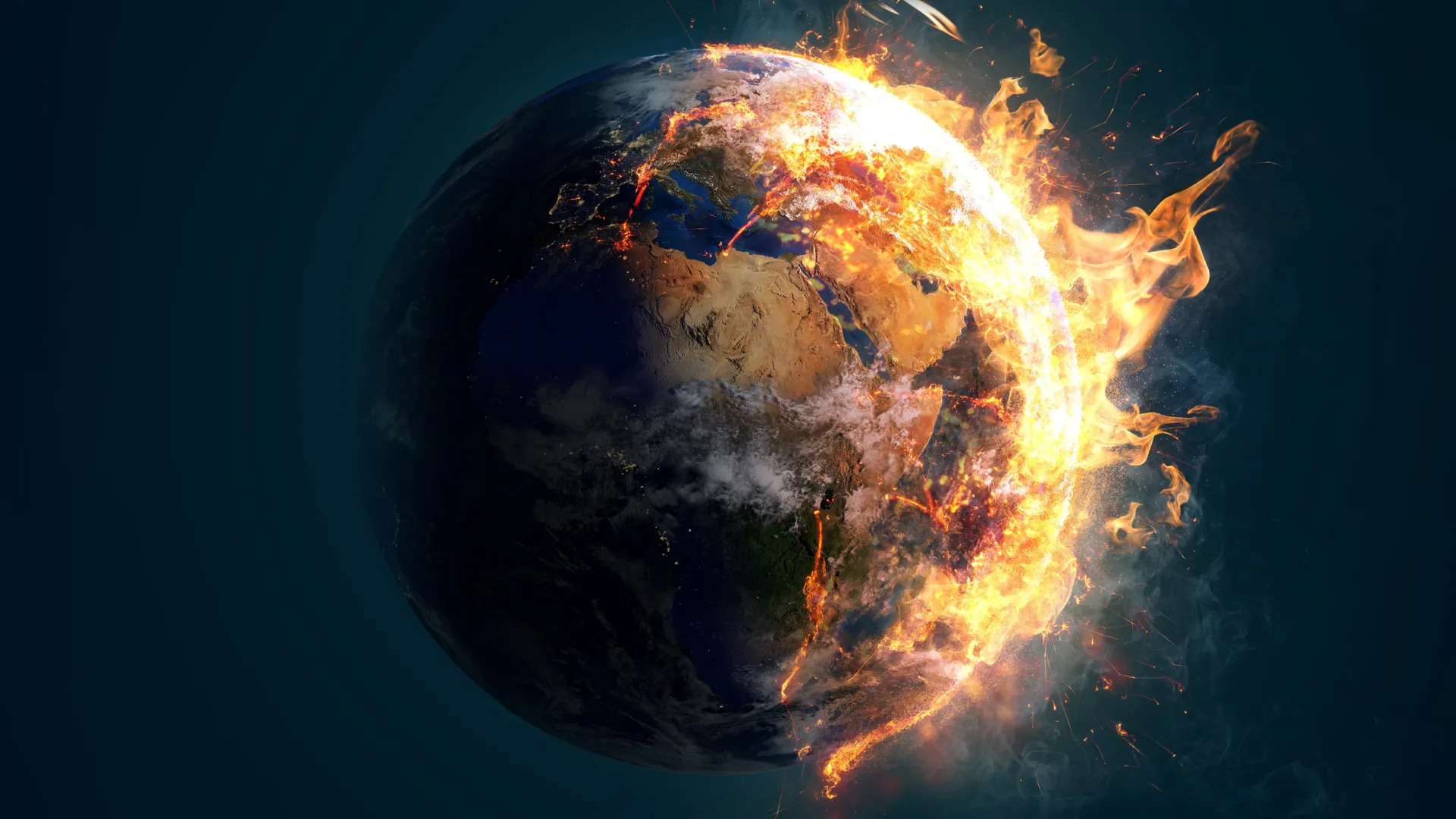
The burning of fossil fuels is driving the fastest warming on record (3), and that speed is the danger, because farms, cities and coasts get less time to adapt. In the Hawizeh Marshes (7), the same fuel arrives as a double pressure: oil expansion on the land and drought on the water that fishers and buffalo herders depend on. These marshes have already been brought to the edge once, when Saddam Hussein's government drained the Mesopotamian wetlands in the 11990s HE to punish the people who rose against it in 11991 HE, and UN monitors later found less than a tenth of the original marshland left, with Hawizeh among the few parts to survive.
Burning fossil fuels drives the heat, and a faster rise leaves farms, cities and coasts less time to adapt.
Source: ScienceDaily · World
Part of the Mesopotamian marshes where Sumerian cities rose, Hawizeh still feeds fishers and buffalo herders who depend on its water.
Source: Middle East Eye

Who profits
The warning of painful years ahead treats falling living standards as the result of government choices rather than bad weather (15), and that is the right place to look. Who absorbs a hard time has long been a political decision: when the Black Death left England short of workers, Parliament answered with the Statute of Labourers in 11351 HE, holding wages down by law just as labourers gained the power to raise them.
The title should attribute the fall in living standards to government choices, highlighting the role of powerful actors.
Source: BBC · World

Rights and justice
A Thai protester who questioned the monarchy has been jailed for 34 years (12), a sentence built by stacking charges under Article 112, which since 11976 HE has carried three to 15 years per count. In Mexico, the killings of two women and a lynching (14) grow from impunity, where most murders go unpunished and people stop expecting justice from the state. Students relying on university food schemes (1) face a quieter version of the same gap: a right that exists on paper means little when the conditions for using it are missing.
Students who cannot afford to eat struggle to study, so access to university means little unless food is covered too.
Source: Dailymaverick · World
Thailand's law against insulting the monarchy carries up to 15 years per charge, so sentences for speech stack into decades.
Source: BBC · Thailand
Femicide means killing women because they are women; in Mexico most murders go unpunished, and that impunity feeds a cycle of revenge.
Source: El PaíS English



Health
New research suggests snakebites may kill up to 513,000 people a year (8), more than three and a half times the top of the World Health Organization's long-standing estimate of about 138,000. The WHO only listed snakebite envenoming as a neglected tropical disease in 12017 HE, and the gap in the numbers tells the same story: when the dead are mostly rural and poor, they are the last to be counted.
The World Health Organization's long-standing estimate tops out near 138,000, so far more people, mostly rural and poor, may be dying uncounted.
Source: ScienceDaily · World

Science breakthroughs
Much of today's work is about seeing more exactly: ten years of satellite carbon dioxide records have been sharpened (2), extra snowfall is being weighed against ice loss in East Antarctica (6), and four frogs in Peru have been named at a time when about 41 percent of amphibians are threatened (13). Others are looking at how we use the land and how we read the cosmos, from a certification that lets solar farms double as wildlife habitat (16) to Hubble's surprise about how the young universe left darkness some 13 billion years ago (9). Charles David Keeling began his continuous carbon dioxide record at Mauna Loa in 11958 HE (1958), and today's satellites carry that same patient habit of counting from one mountain to the whole planet.
Cleaner records show more reliably where carbon dioxide is released and absorbed, and climate policy depends on knowing exactly that.
Source: Phys.org · World
If time can arise inside a tiny lab system, the universe may build it, rather than it being a stage where everything happens.
Source: ScienceDaily · World
East Antarctica holds enough ice to raise seas over 50 metres, so even small shifts in its balance matter for coastlines.
Source: Phys.org · East Antarctica
Early stars and galaxies cleared the fog filling the young universe about 13 billion years ago; how they did it is still debated.
Source: ScienceDaily · World
Separating liquids eats huge amounts of energy in industry, so faster filters could cut that cost, if they work at scale.
Source: Phys.org · World
Naming a species is the first step to protecting it, and about 41 percent of amphibians are threatened with extinction.
Source: Phys.org
Solar farms need a lot of land, so a shared standard could make clean energy sites living habitat too.
Source: Positive News · World