This page follows the news about rights and justice: court rulings, new laws, crackdowns on protest and the press, the treatment of migrants and refugees, abortion and bodily autonomy, and discrimination by race, religion, gender or class. We gather these stories in one place because they are really one story. Each asks who a society counts as a full person, and who gets to decide.
Seen across the Holocene, written rights are very young. Around 8250 HE, the Babylonian king Hammurabi had 282 laws carved on a basalt stele, and the penalties depended on whether the victim was a noble, a commoner or enslaved. For most of the next four thousand years, justice was something rulers granted, not something people held. The Universal Declaration of Human Rights was adopted by the United Nations in 11948 HE, and the Refugee Convention followed in 11951 HE, after a war that had uprooted tens of millions. That makes the modern idea of universal rights about 78 years old, less than one percent of the Human Era. It is a recent achievement, and recent achievements can be rolled back.
Read each day's stories with three tests. Who acts: the government, court, army, police force or company making the decision, named directly. Who pays: the people whose movement, speech, body or safety is narrowed, and whether the cost lands hardest on the poor, the foreign born or the occupied. What changes: whether a ruling widens the circle of people protected or shrinks it. We do not treat a state and the people it detains as equal sides. When Israel, the occupying power in Palestine, holds Palestinians without charge, we say so, as plainly as we name the United States, Russia, China or the European Union when their laws and borders decide who is free. The record also shows how rights grow: New Zealand women won the vote in 11893 HE after a petition signed by nearly 32,000 people.
Israel's election (2) matters to the roughly one in five Israeli citizens who are Palestinian, whom the 12018 HE Nation-State Law places outside the right to self-determination, which it reserves for Jews alone. That inequality has a long history: from 11948 to 11966 HE, Palestinian citizens of Israel lived under military rule and needed permits to travel between their own towns. The UK Budget story (3) is about a quieter injustice. The tax-free allowance has been frozen at £12,570 since 12021 HE, so as the state pension rose, a freeze nobody voted on began taxing the poorest pensioners, and fixing it took a specific decision.
Palestinian citizens are about one in five Israelis, yet the 12018 Nation-State Law reserves self-determination in Israel for Jews alone.
Source: 972mag · Gaza
The state pension has almost caught up with the frozen £12,570 tax-free allowance, which was quietly pulling the poorest pensioners into paying tax.
Source: BBC · UK
Jordanian officials say gunmen killed seven people at a church funeral (12). Nobody yet knows who did it or why, so it would be wrong to fill that gap with guesses. What is known is how deep these communities go: the Madaba mosaic map, the oldest surviving map of the Holy Land, was set into a church floor in Jordan about 1,450 years ago, and Christians have worshipped there continuously ever since.
An attack on mourners at a Christian funeral is rare in Jordan, and who did it and why is still unclear.
Source: BBC · Jordan
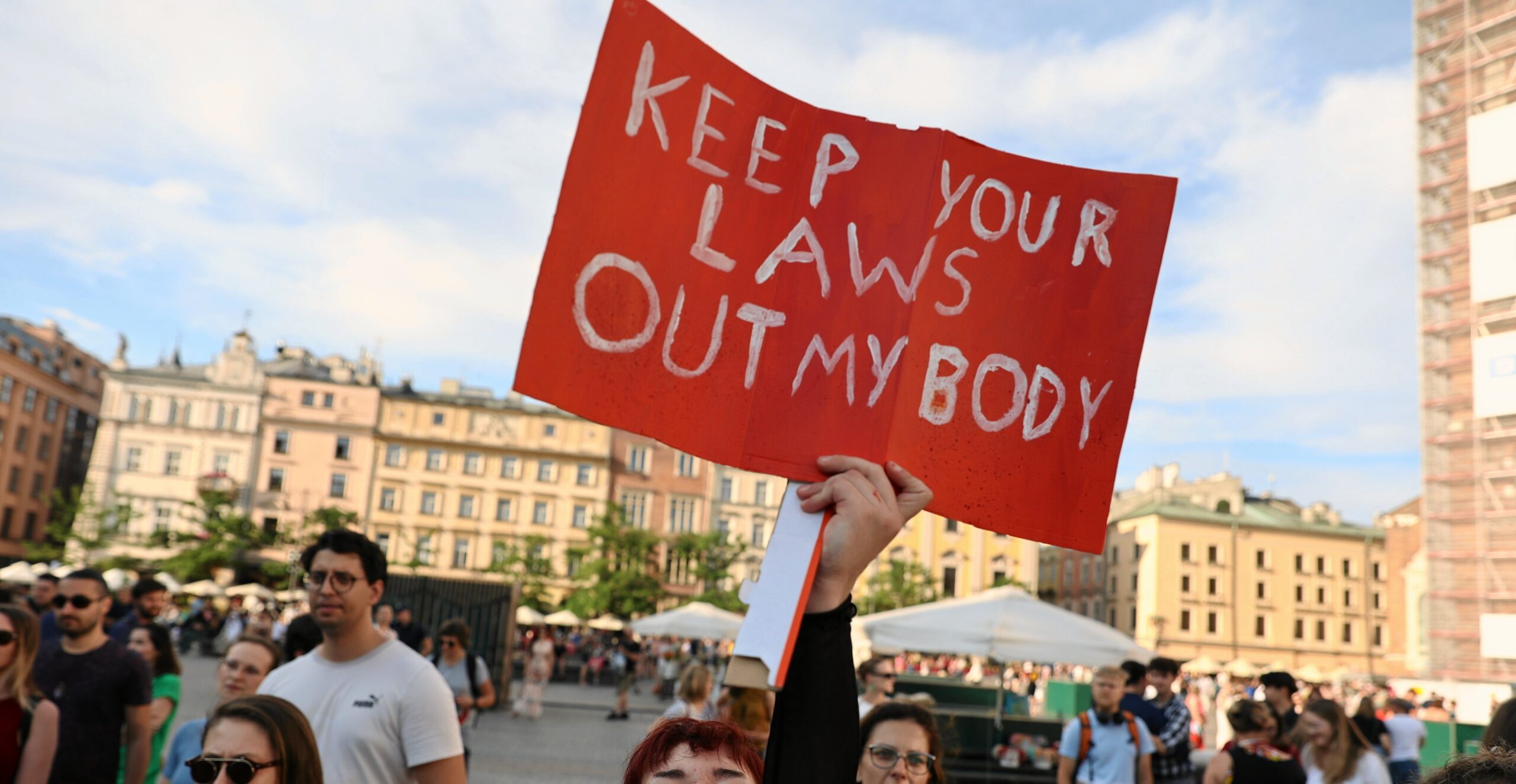
Poland's parliament has voted to loosen one of Europe's strictest abortion bans (12), and the vote belongs to the women who filled Polish streets year after year to demand it. Change came from below. Poland's 11993 HE law had allowed abortion in only three cases, a 12020 HE court ruling removed one of them, and the mass women's strikes that followed are what turned a ruling into a political cost no government could ignore.
Poland had one of Europe's strictest bans after a 2020 court ruling, and years of mass women-led protest pushed this vote.
Source: Notes From Poland · Poland