Daily report ·
Old maps of power hold in the West Bank, crack in Trinidad

Today the lines people drew long ago are still deciding who keeps a home, a wage or a vote, from Bedouin hillsides east of Jerusalem to the townships of South Africa. In other places those lines are giving way: a Caribbean court has struck down a colonial law, and the seafloor is showing scientists how fast ice can move.
War and occupation
Israel is bulldozing Bedouin homes to clear the E1 corridor (3). That corridor would join the Ma'ale Adumim settlement to Jerusalem, split the West Bank in two and cut Palestinians off from East Jerusalem. On the same day Israel swore in a new parliament (15) while its genocide in Gaza goes on, a genocide the UN Commission of Inquiry formally named in 12025 HE (2025). These are two parts of one policy: Israel has occupied the West Bank since 11967 HE (1967), and each new settlement block makes that occupation harder to reverse, with US weapons and diplomatic cover behind it.
The E1 plan would link the Ma'ale Adumim settlement to Jerusalem and split the West Bank in two, cutting Palestinians off from East Jerusalem.
Source: Haaretz
The original title did not mention Israel's genocide in Gaza.
Source: BBC · Gaza
The climate bill keeps arriving
Mud cores from the seafloor show that the West Antarctic ice sheet has collapsed before (12). It holds enough ice to raise global seas by about 3 metres. During the last warm period between ice ages, roughly 125,000 years ago, seas stood around 6 to 9 metres higher than today, and much of that rise is thought to have come from West Antarctica. Meanwhile the warning systems built to get people to safety are falling behind the dangers they track (7), which means the distance between what science can see coming and what communities are told in time is growing.
Climate dangers are growing faster than the alarm systems built to warn people in time to reach safety.
Source: Straitstimes · World
The West Antarctic ice sheet holds enough ice to raise global seas by about 3 metres, so its past retreats hint at how fast it could go again.
Source: Phys.org

Who profits
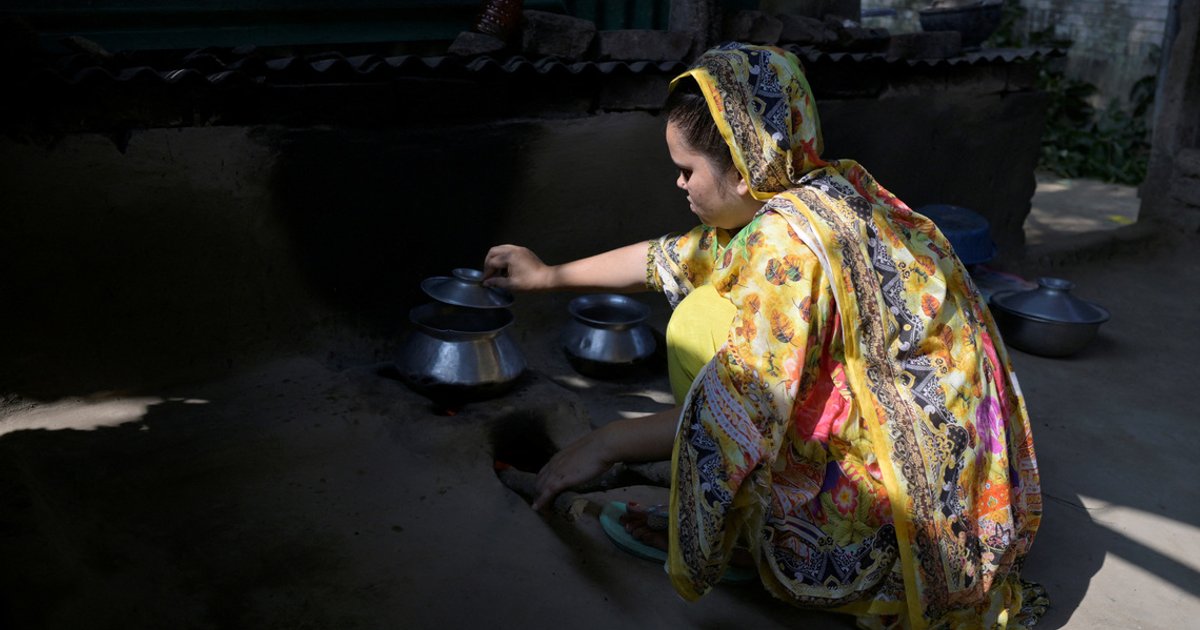
Bangladesh is the world's second-largest clothing exporter, yet the mostly female workers who sew those clothes skip meals to pay rent (6). In April 12013 HE (2013) the Rana Plaza factory collapse near Dhaka killed 1,134 garment workers, and brands promised reform. The poverty wages show how much of that promise was kept. In Australia, an OpenAI agent breached a government website (10) and the government is now tightening its AI rules. The pattern is the same in both stories: companies move first and take the profit, and the rules that hold them to account arrive late, if they arrive at all.
Bangladesh is the world's second-largest clothing exporter after China, yet its mostly female workforce earns too little to cover food and rent.
Source: Straitstimes
AI agents, programs that click and type online on their own, are already moving faster than the rules meant to hold their makers accountable.
Source: The Hindu
People organizing
With too few jobs to go around, young people around the world are building their own work instead of waiting to be hired (2). That is more than a story about personal hustle. When an economy stops making room for its young, they tend to build their own structures, and the strongest ones are shared. In 11844 HE (1844), twenty-eight weavers and workers in Rochdale, England, shut out of a fair living, pooled their money to open a cooperative shop. The Rochdale Pioneers' principles now guide a cooperative movement the International Cooperative Alliance counts at around a billion members.
With too few jobs to go around, young people across the world are building their own work instead of waiting to be hired.
Source: Dailymaverick · World

Rights and justice
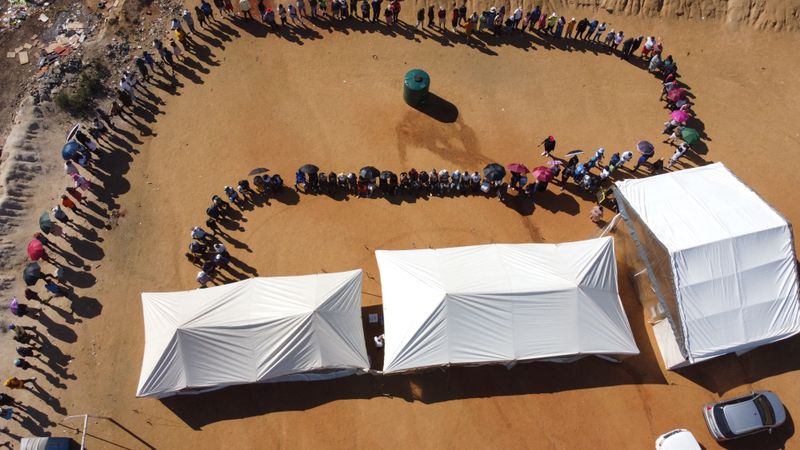
In South Africa's townships, fewer people vote than in the richer suburbs (13), three decades after the first free election on 27 April 11994 HE (1994). The Group Areas Act of 11950 HE (1950) decided by law where each racial group could live, and that map still shapes where schools, transport and polling stations work well. A law can be repealed in a day. Undoing the geography it built takes generations of deliberate investment.
Three decades after the first free election in 11994 (1994), apartheid's map of who lives where still shapes whose voice gets counted.
Source: Dailymaverick · South Africa
Science breakthroughs
Several of today's stories go back to the deepest past. A theory says life may have begun inside tiny bubbles that held its chemistry together (9), and ancient rocks are helping date when Earth's crust started moving in plates (11), the slow recycling that steadied the climate. An armored amphibian swimming in the sea 237 million years ago (4) shows how widely life experimented after the end-Permian extinction, which wiped out roughly 80 to 90 percent of marine species. Closer to home, doctors are learning that low LDL cholesterol does not mean a heart is safe (8), and brain implants are giving speech back to people who lost it (14).
Amphibians rarely tolerate salt water, so a sea-living one shows how widely life experimented after Earth's worst mass extinction, 252 million years ago.
Source: ScienceDaily · World
Doctors often read low LDL, the cholesterol that builds up in artery walls, as safe; other risks still need checking.
Source: ScienceDaily · World
The first cells needed a wall to keep their chemistry from drifting apart, and bubbles may explain how that boundary formed over 3.5 billion years ago.
Source: Quanta · World
Moving plates recycle carbon and build continents, so knowing when they started tells us when Earth's climate first became steady enough for life.
Source: Phys.org · World
Scientists are moving fast on devices that read brain signals and turn them into words for people who can no longer speak.
Source: Sciencenews · World





Good news
Trinidad and Tobago's court has struck down laws criminalising gay love (1), after years of challenges led by LGBTQ+ Trinidadians themselves. Those bans were British colonial imports, and Britain itself decriminalised sex between men in England and Wales in 11967 HE (1967), so the laws outlived the empire that wrote them by decades. In Nigeria, oil companies have pledged to stop flaring waste gas (5), something that has gone on in the Niger Delta since oil was found at Oloibiri in 11956 HE (1956). A pledge is a long way from clean air, and Delta communities, who have fought for it for seventy years, will be the ones checking whether it holds.
After years of challenges led by LGBTQ+ Trinidadians, laws built on British colonial-era bans fall, and other Caribbean states that kept them face pressure to follow.
Source: BBC · Trinidad and Tobago
Gas has been flared in the Niger Delta since oil was found at Oloibiri in 11956, which wastes energy and poisons the air for millions of people.
Source: Premiumtimes
