Daily report ·
Spanish workers strike for homes as Israel bombs another Gaza hospital

Today the clearest pattern is what people build and what powerful states tear down: Spanish workers organize for homes, Namibian villages get clean water, and Israel's genocide in Gaza claims another hospital and its surgeon. Under the noise, science keeps naming what we stand to lose, from reef corals to the grid a solar storm could knock out.
War and occupation
Israel struck a Gaza hospital and killed six people, a surgeon among them (3). This is the deliberate dismantling of a health system, carried out with US-supplied weapons as part of a genocide, not collateral damage. Far to the north, Russia and Ukraine agreed a large prisoner swap (12), a small act of trust while the killing goes on. Both stories test the same law: the Geneva Conventions of 11949 HE (1949) protect hospitals and govern the return of prisoners of war, and today one rule is being kept while the other is being smashed.
Every killed surgeon is thousands of operations Gaza will never get, as Israel's genocide keeps dismantling the hospitals that keep people alive.
Source: CBC
Prisoner exchanges are often the first trust built between warring sides, though the war and its killing continue.
Source: The Moscow Times

The climate bill keeps arriving
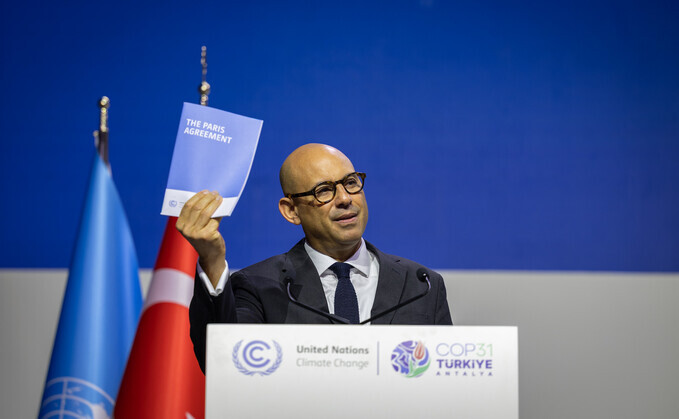
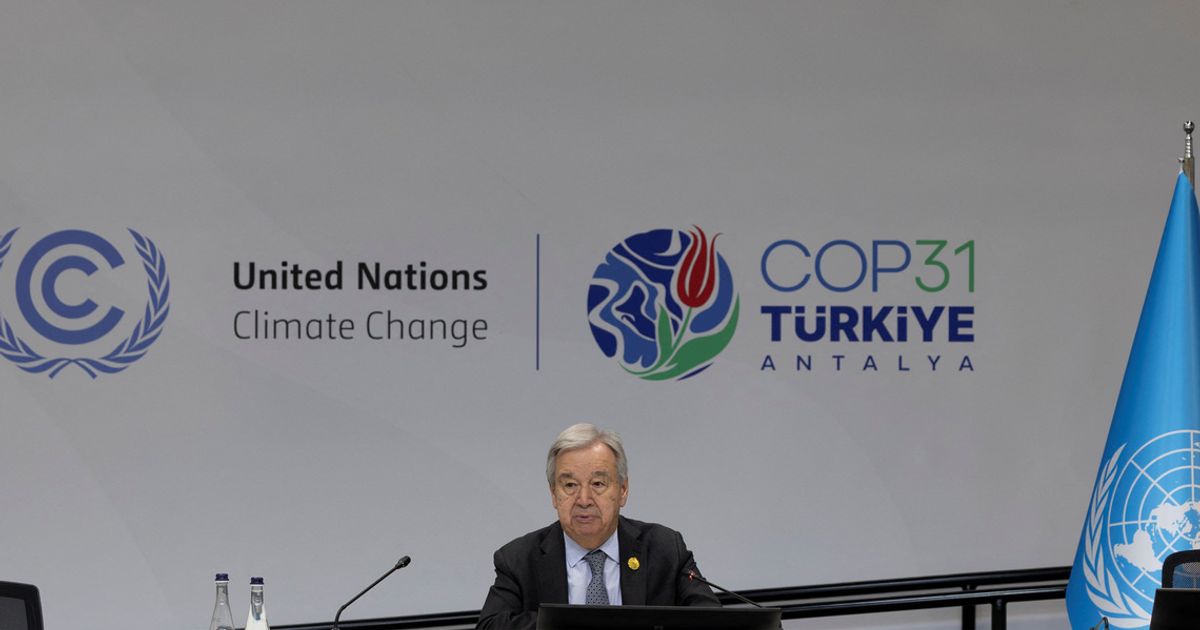
The UN's climate chief describes poor nations trapped between debt and disaster (6), while the UN Secretary-General demands fossil fuel cuts at a summit still divided over them (7). It took until the Dubai summit in 12023 HE (2023), more than thirty years after the UN climate treaty of 11992 HE (1992), for a final text to call for 'transitioning away' from fossil fuels. In Gaza, Denmark's $8.9m (10) answers winter floods that are not a natural disaster: Israel destroyed the homes and its siege blocks shelter materials, so rain now pours into tents where hundreds of thousands of displaced families sleep.
Countries borrow to rebuild after floods and storms, then repay instead of preparing, so the next disaster hits harder.
Source: Premiumtimes · null
Burning coal, oil and gas drives most warming, and every UN climate summit since 11992 HE (1992) has struggled to say so in writing.
Source: Straitstimes · World
Israel's genocide has destroyed most homes and its siege blocks shelter materials, so winter rain now floods tents holding hundreds of thousands.
Source: Middle East Eye
Who profits
Africa grows cotton but mostly ships it out raw, and it now wants the spinning, weaving and sewing jobs where the money is (11). A single Microsoft outage freezing hospitals, airlines and banks (14) shows the opposite problem: too much of daily life runs through one company's machines. There is a recent precedent. In July 12024 HE (2024) one faulty CrowdStrike update crashed about 8.5 million Windows computers, by Microsoft's own count, and grounded flights worldwide.
Growing a crop is only the start: the jobs and money come from spinning, weaving and sewing it, and Africa wants that work at home.
Source: AllAfrica · Africa
When hospitals, airlines and banks share one provider, a single failure stops all of them at once.
Source: BBC · World

People organizing
Millions of Spanish workers walked out to demand homes they can afford (2), turning rent from a private worry into a public question of power. Spain has done this before. On 14 December 11988 HE (1988), a general strike of around eight million workers shut the country down and forced the government to back away from its labour reforms.
When rent eats most of a paycheck, a general strike puts housing on the table as a question of power, not just prices.
Source: CBC

Science breakthroughs
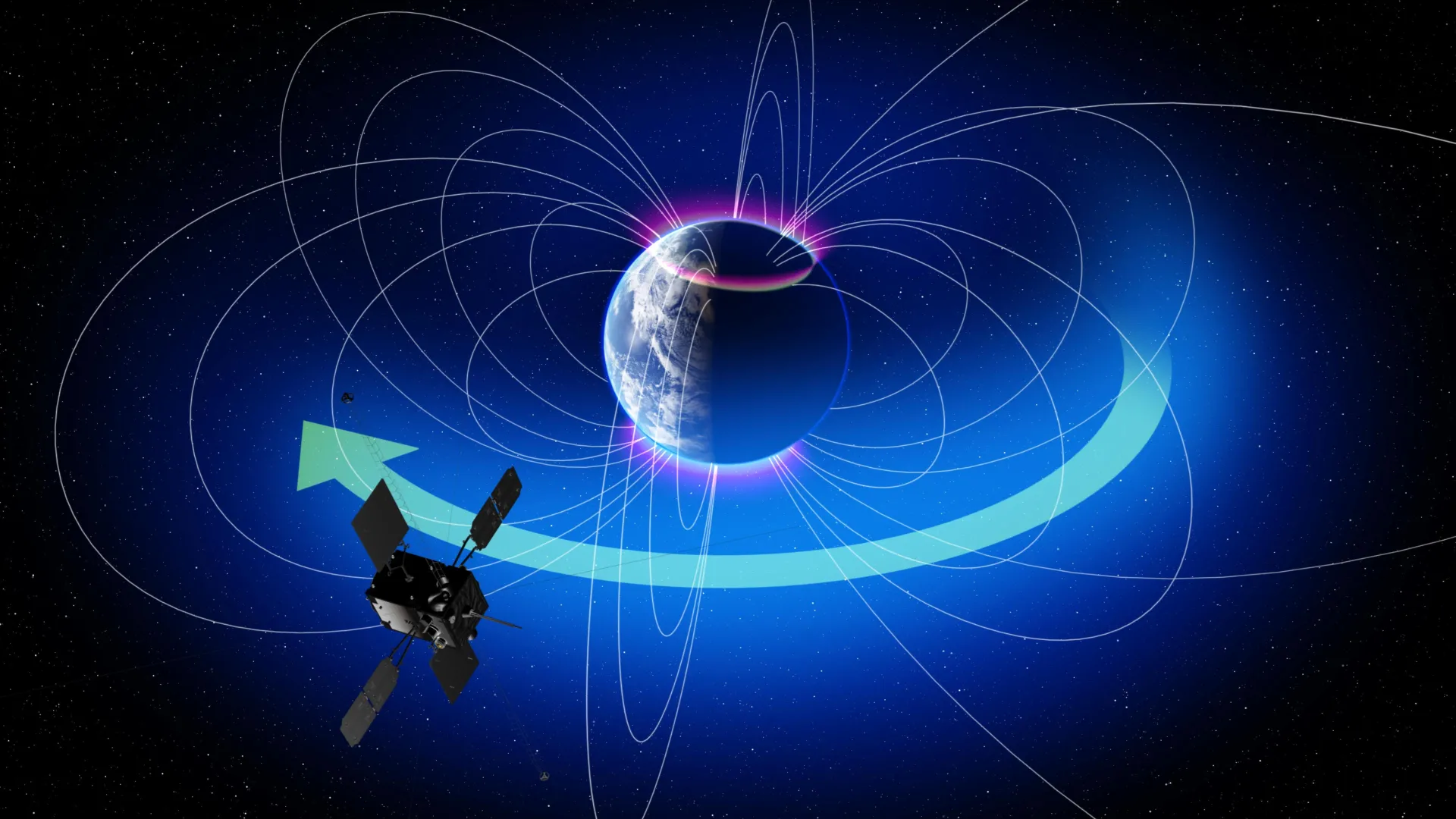
Several of today's findings come down to naming things precisely. DNA shows that 12 Great Barrier Reef corals are separate species (1), and physicists have directly watched electrons make jumps that looked impossible (4). Another team has worked out how superhot plasma heats itself (8). Meanwhile a report urges water-based energy storage, which already holds over 90% of the world's stored grid electricity (9). New work also suggests Earth's own magnetic field may have made a monster solar storm worse (13), and the Carrington storm of 11859 HE (1859), which set telegraph offices alight, is the yardstick for what a repeat would do to satellites, GPS and power grids.
You can only protect what you can name. Lumped together, these corals hid how much reef life ocean heatwaves could quietly wipe out.
Source: Phys.org
Niels Bohr proposed electron jumps in 11913 HE (1913). Watching them directly tests the rules behind lasers, LEDs and computer chips.
Source: ScienceDaily · World
Plasma, gas so hot its atoms split into charged particles, fills the Sun and fusion reactors. Knowing how it heats itself helps engineers tame fusion.
Source: Phys.org · World
Pumping water uphill when power is cheap and releasing it later already holds over 90% of the world's stored grid electricity.
Source: Premiumtimes · World
The Carrington storm of 11859 HE (1859) set telegraphs on fire. A storm like it today would threaten satellites, GPS and power grids.
Source: ScienceDaily · World




Good news
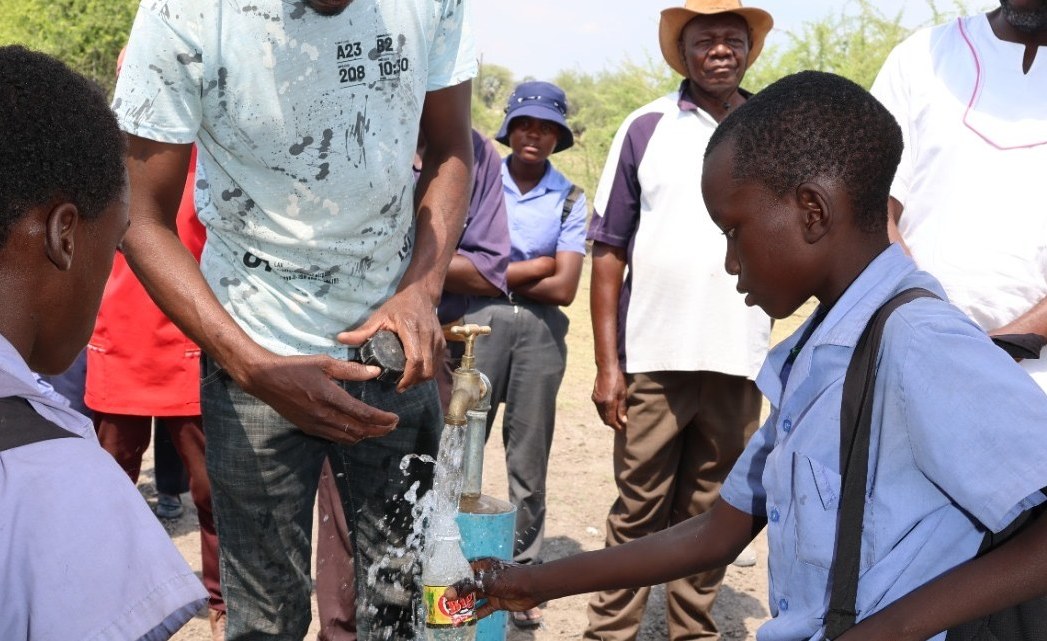
Namibia has laid a 10km pipeline that brings clean water to its villages (5). In the driest country south of the Sahara, that hands back hours each day, mostly to women and girls who used to fetch it. In July 12010 HE (2010) the UN General Assembly recognised safe drinking water as a human right, and this is what that right looks like when it is built in pipe and concrete.
In the driest country south of the Sahara, a tap close to home saves hours of daily walking, work that falls mostly on women and girls.
Source: AllAfrica