Daily report ·
Who carries the cost: Gaza's displaced, small islands and indebted households

Today the weight of big systems lands on the people with the least room to absorb it: families in Gaza under plastic sheeting, an island of 11,000 people, households with expiring mortgages. Alongside that, there are quieter signs of repair, in new grids that share clean power, trees going into dry Tunisian soil and physicists pushing at the speed limits of computing.
War and occupation
Israel's genocide in Gaza has destroyed most of the territory's homes, so nearly two million people now meet the winter rains under canvas and plastic sheeting (2). The cold is not a natural disaster. It follows from a deliberate campaign of demolition, carried out with American weapons, which the UN Commission of Inquiry has found to be genocide. Many of these families descend from the roughly 700,000 Palestinians Israeli forces drove from their homes in 11948 HE (1948), so for them displacement is a story that has now run for generations.
Israel's genocide has destroyed most of Gaza's homes, so nearly two million people face winter storms under plastic sheeting and canvas.
Source: Al Jazeera
The climate bill keeps arriving
Vietnam built about 16 gigawatts of solar in 12019 and 12020 HE, and its grid now has to rethink pricing so that electricity is worth the most when people actually need it (12). This is what success looks like: when there is plenty of power at noon, the hard problem becomes the evening. The first practical silicon solar cell came out of Bell Labs in 11954 HE (1954) and converted only about 6 percent of sunlight into electricity, so a whole national grid now struggling with too much sunlight is a remarkable turn in one human lifetime.
Vietnam built about 16 gigawatts of solar in 12019 and 12020, and the grid now needs prices that reward power when it's needed.
Source: Nikkei Asia

Who profits
South Korea has fined Coupang $220 million for squeezing rival food delivery apps (7), and in the UK, rising interest rates are adding hundreds to monthly mortgage bills as cheap fixed deals expire (9). Both stories are about who gets to set the terms: a platform that sits between restaurants and riders, or a central bank whose decisions land hardest on households that borrowed when money was cheap. The modern fight over private power that sets the rules for everyone else dates back at least to the Sherman Antitrust Act in the United States in 11890 HE (1890), and fines alone have rarely ended that fight.
Whoever controls the delivery app sets the terms for restaurants and riders, so this tests whether fines can restore real competition.
Source: Cna
Central banks raise rates to cool inflation, and the cost lands hardest on households whose cheap fixed deals are now expiring.
Source: BBC · UK
Rights and justice
El Hierro, an island of 11,000 people, has declared an emergency as boats from one of the world's deadliest migration routes reach its shore (6). Meanwhile the EU praises Montenegro and leaves most Balkan applications stalled (10), and Canada's leader Carney defends immigration targets that drive nearly all of his country's population growth (11). The thread is who belongs and who carries the burden of welcome. The European project that now guards its edges so tightly began with just six founding states under the Treaty of Rome in 11957 HE (1957), and it grew because it kept letting others in.
The Atlantic crossing to the Canaries is among the world's deadliest migration routes, and a tiny island is carrying Europe's border alone.
Source: Al Jazeera
Balkan countries have waited decades to join the EU; North Macedonia has been an official candidate since 12005 HE (2005), and stalled hopes breed frustration.
Source: Balkan Insight
Immigration drives nearly all of Canada's population growth, so these numbers shape housing, the labour supply and public services for years.
Source: CBC · Canada


Health
In Canada, an animal sedative mixed into street fentanyl is overwhelming emergency rooms because naloxone cannot reverse it (3), and in China, children are struggling with mental health problems at younger and younger ages under the pressure of a university entrance exam taken by more than 13 million students a year (13). In both cases a system built for one problem is meeting a new one it was not designed for. Naloxone was approved in the United States in 11971 HE (1971), and its most familiar form, a nasal spray anyone can use, was only approved in 12015 HE (2015). That gap shows how slowly overdose care catches up with the drug supply.
Naloxone, the opioid overdose antidote, does not work on this sedative, so overdoses last longer and withdrawal is harder to treat safely.
Source: CBC · Canada
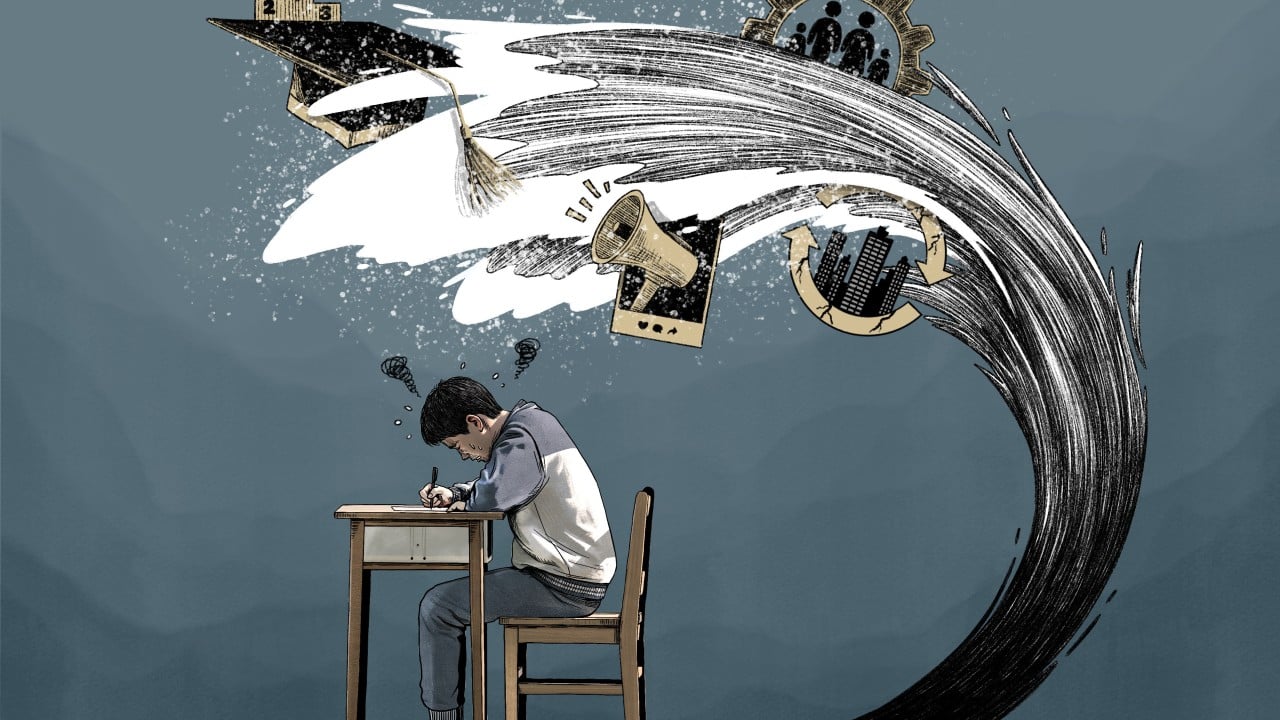
Over 13 million students sit China's university entrance exam each year, and the pressure to win now reaches down into primary school.
Source: Scmp

Science breakthroughs
Physicists are working close to nature's own limit on how fast electrons can switch, which could make chips up to 100,000 times faster (4). A wind farm in Laos is testing whether linked national grids can carry clean power to bigger neighbours like Vietnam (5), and strange gas leaks hint that Mars may still have active volcanoes, with heat that could keep pockets of liquid water alive (8). What these stories share is attention to hidden flows of electrons, of power across borders, and of heat under another planet's crust. The transistor, the switch behind every chip, was first demonstrated at Bell Labs in 11947 HE (1947), and in under 80 years its descendants now number in the billions inside a single phone.
Every phone and laptop is capped by how fast electrons can switch. Working near nature's own limit could make computers vastly faster and cheaper to run.
Source: ScienceDaily · World
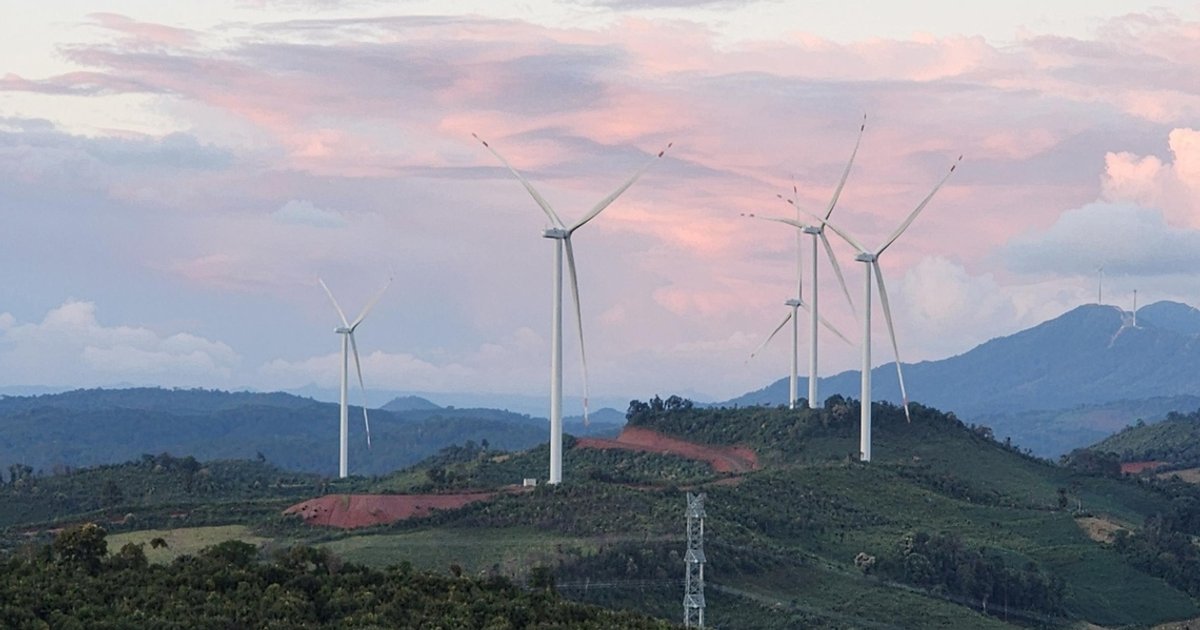
Linking national grids lets a small country sell wind power to bigger neighbours like Vietnam, cutting their reliance on coal-fired plants.
Source: Straitstimes
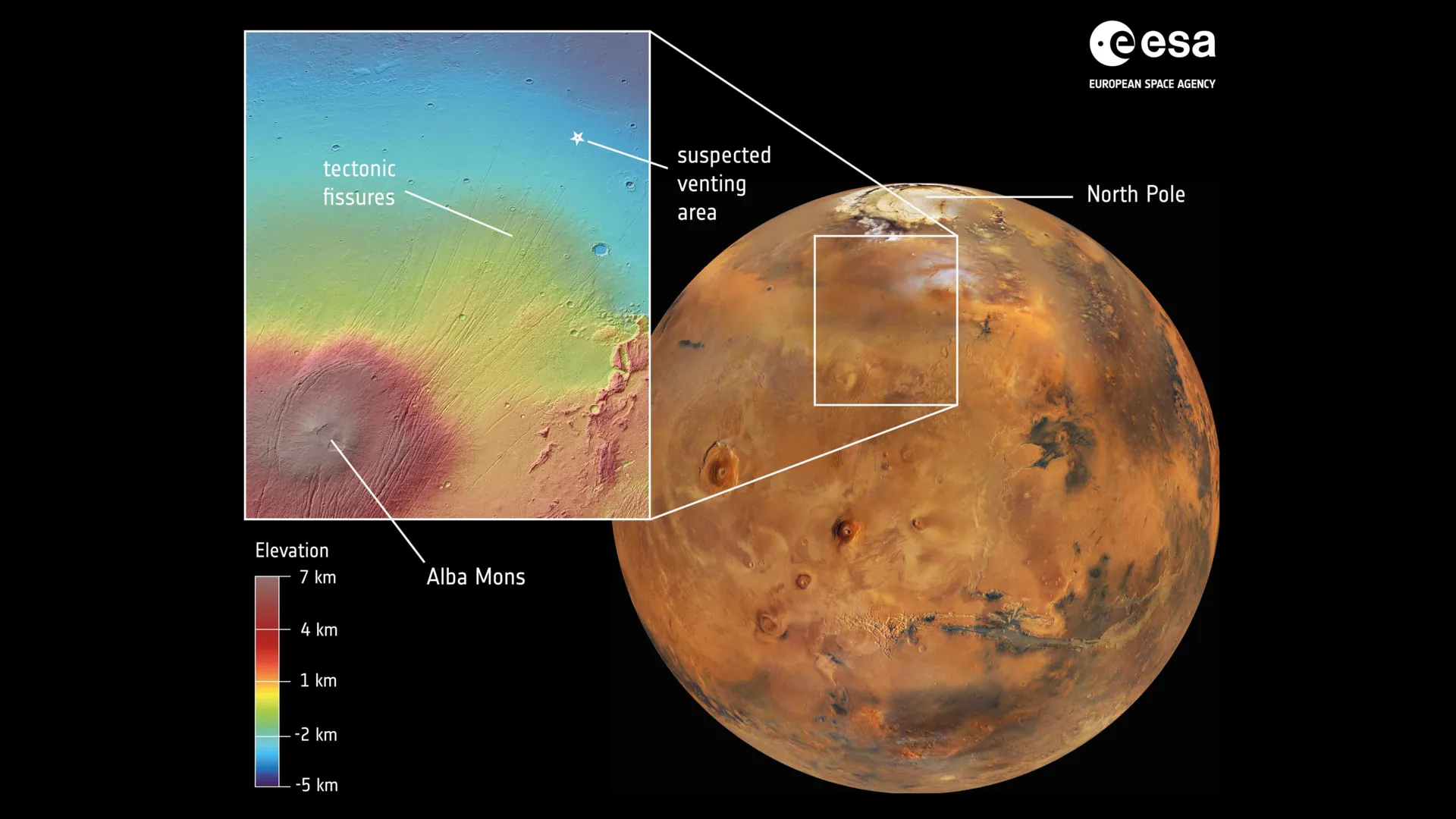
Heat still rising under Mars could keep pockets of liquid water alive, and those pockets would be the best places to look for life beyond Earth.
Source: ScienceDaily · Mars

Good news
Tunisians planted trees across several regions on National Tree Day, and the reason is practical: roots hold soil and rain in place in a country where years of drought have left reservoirs low (1). It is slow, cooperative work, and it pays off in decades rather than news cycles. This land was once among the most fertile in the Mediterranean. After Rome destroyed Carthage in 9855 HE (146 BCE), the province of Africa became one of the main sources of the grain that fed the city of Rome, a reminder that what soils can do depends on how people look after them.
Tree roots hold soil and rain in place, which matters in Tunisia, where years of drought have left reservoirs low and soils exposed.
Source: AllAfrica