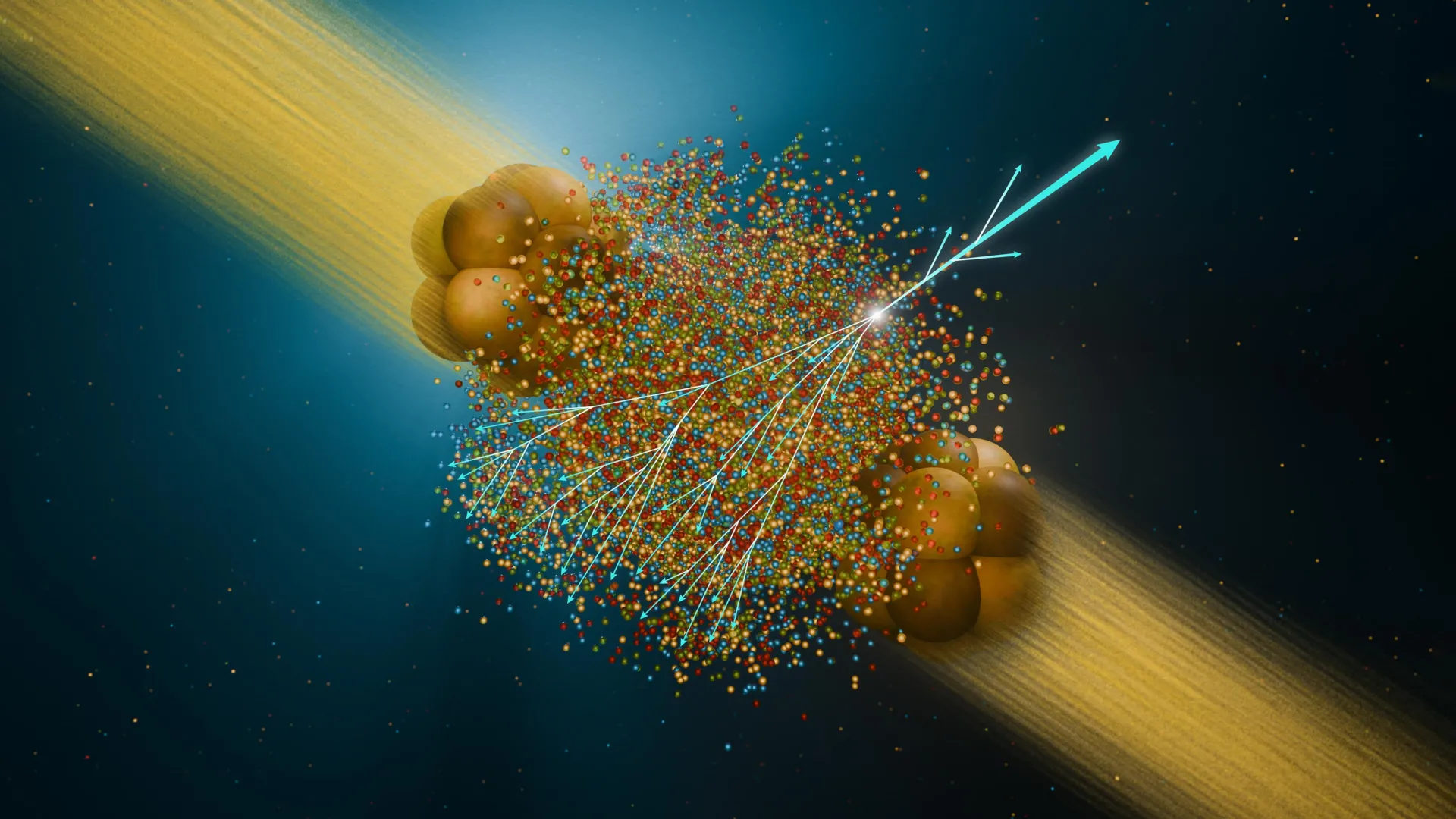
Carl Anderson found the positron, the first known antimatter particle, in 11932, and physicists still cannot say why matter survived its meeting with antimatter (4) in a universe about 13.8 billion years old. The oxygen collisions (7) chase the same early moments, when the particle soup that became protons and neutrons was still hot. The viral gene (5) and the AI enzyme tool (8) work at the other end of the scale, showing how the molecular machinery of life took shape and how we might begin to design it ourselves.
The Big Bang should have made equal matter and its opposite, antimatter, which destroy each other. Why anything survived remains among physics' biggest open questions.
Source: ScienceDaily · World
Potassium channels are tiny gates that let nerves fire and hearts beat, so a viral version hints at how such machinery took shape.
Source: Phys.org · World
Microseconds after the Big Bang, matter was a searing particle soup. Recreating it helps show how protons and neutrons, building blocks inside us, first formed.
Source: ScienceDaily · World
Enzymes are proteins that speed up chemistry in living things, so designing them faster could mean new medicines and cleaner industrial processes.
Source: Phys.org · World